Use case
Smart Labels for Logistics
Lane visibility, exception detection, and proof of journey — without the reverse-logistics overhead of reusable trackers.
Why logistics teams use them
Visibility that survives the lane.
Logistics teams need shipment-level data that holds up across carriers, transfers, and partner depots — whether you call it shipment monitoring, GPS tracking for packages, or simply shipment tracking devices, the underlying problem is the same: you need clean data that travels with the shipment, without committing to hardware that has to come back.
- Independent visibility across multi-carrier and multi-leg lanes.
- Clean attribution of dwell, exceptions, and route deviations.
- Single-use means single accountability — one label, one shipment.
- Data flows into GoAndTrack for ops, partners, and stakeholders.
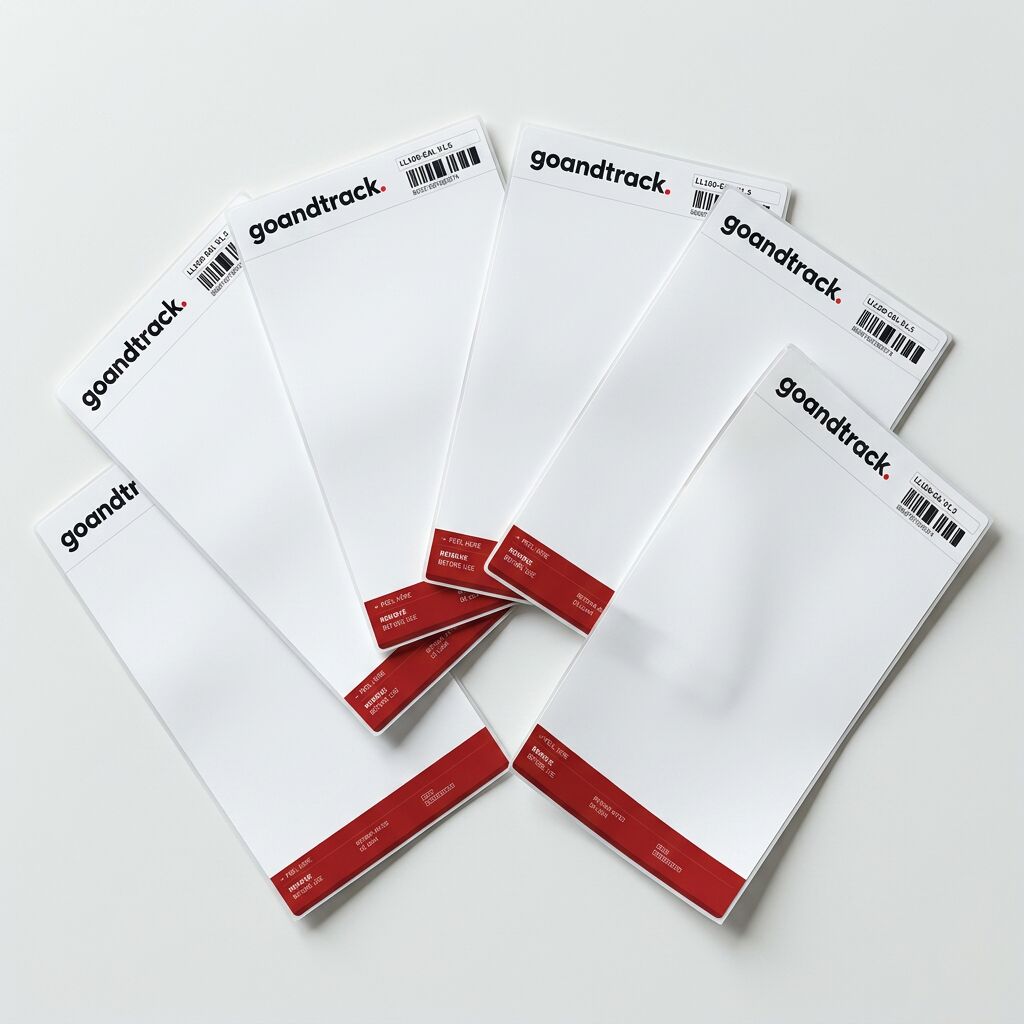
Where they fit
Logistics scenarios.
Domestic & cross-border road
Single-leg and multi-stop road movements where you need granular journey data without recovering hardware from drivers or depots.
European linehaul
Cross-border lanes where carrier handovers and customs touchpoints create visibility gaps that disposable labels close cleanly.
Partner & 3PL networks
Lanes that traverse partner-owned warehouses where you have no operational authority to recover reusable trackers.
New lane validation
Validating performance, dwell, and exceptions on new routes before contracting at volume.
Service-level evidence
Independent journey data for SLA, claims, and dispute resolution with carriers and 3PLs.
Returns & reverse flows
Visibility on returns lanes where customer-side recovery of reusable hardware is unrealistic.
Get visibility on the lanes that matter.
Tell us the route. We'll structure a pilot with measurable outputs.